Tea First, Talk Later: The Unspoken Choreography of Haggling in Kemeraltı
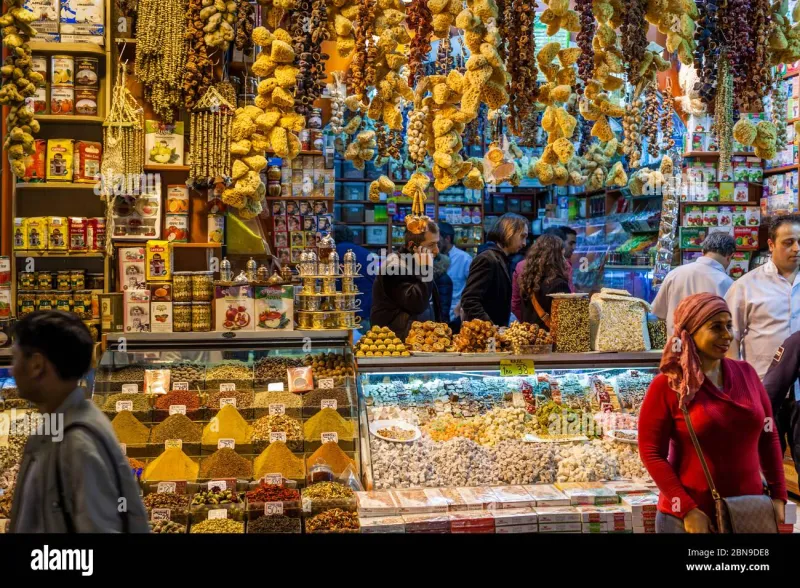
Photo: Istanbul Kemeralti bazaar market stall vendor tea Turkey shopping, via c8.alamy.com
If you've ever bought anything in America, you've probably never negotiated the price of a pair of socks. The number on the tag is the number. You pay it, you leave, nobody's feelings are involved.
Now walk into Kemeraltı, Izmir's sprawling covered bazaar that's been trading since the 1600s, and watch what happens when a local approaches a stall of leather jackets. Nobody touches a price tag, because there usually isn't one. Instead, there's a greeting, a chair offered, a glass of tea that appears seemingly from nowhere — and only then, minutes later, does anyone mention money.
What looks like a sales tactic is actually something closer to a social contract. And if you're visiting from the States, understanding it will change your whole experience of the bazaar.
The Tea Isn't a Trap
Let's address the first-timer's biggest anxiety: the tea. A vendor hands you a tulip-shaped glass, and suddenly you feel indebted. You're sure you're about to be steered into buying a rug you don't want.
Here's the reality: the tea is hospitality, full stop. Vendors pour tea for regulars, for neighbors, for anyone who stops to chat. Refusing it politely is fine — a hand raised with a smile and "teşekkürler" works. Accepting it doesn't obligate you to anything, though sticking around for the length of a glass is considered good manners. Think of it as the bazaar's version of being offered a seat, not a timeshare pitch.
Haggling Is a Conversation, Not a Fight
The biggest mindset shift for American shoppers: bargaining here isn't adversarial. It's closer to a dance with known steps. Both sides know the opening number will be theatrical. The first price quoted is rarely the price anyone expects to pay — it's an invitation to talk.
A good rule of thumb: if there's no price tag, negotiation is expected. If there is one, the discount will be smaller, and pushing hard can read as rude. And if a vendor genuinely won't budge, that's usually the real price. Take the "no" gracefully and move on.
The rhythm matters more than the math. Counter too aggressively — offering a quarter of the asking price — and the conversation stalls. Locals tend to counter at roughly half to two-thirds and let the middle ground emerge. Watch a seasoned Izmir shopper and you'll notice they never look like they're negotiating. They're chatting, examining the goods, letting a comfortable silence do some of the work.
The Walk-Away, Explained
Every bargaining guide mentions the walk-away. In Kemeraltı, it's real — but it's also frequently misunderstood.
Sometimes walking away genuinely ends the deal, especially for low-margin goods. Sometimes it prompts a final offer shouted after you, which you're then free to take or leave. The key is sincerity: don't walk away as a bluff unless you'd genuinely be fine not buying. Vendors have watched four centuries of tourists and can smell a fake exit from across the arcade.
And here's the etiquette part that surprises people: once you agree on a price, the deal is done. Backing out after a handshake over a few lira is the one true faux pas in the bazaar. Your word is the currency here.
A Cheat Sheet for Your First Saturday
- Learn two words. "Ne kadar?" (how much?) and "pahalı" (too expensive) will carry you further than any app.
- Shop in the morning. Vendors are fresher, the lanes are calmer, and the first sale of the day is considered lucky — some will deal more freely for it.
- Buy more, save more. Two items from one stall is the easiest discount you'll ever earn.
- Cash talks. Card payments are common now, but a cash offer still closes deals faster.
- Smile. Seriously. This is a social exchange dressed up as commerce. Grouchiness gets you the tourist price and the cold tea.
Why It's Worth Learning
You might score a better deal. But the real payoff of Kemeraltı isn't the ten lira you shaved off a leather bag. It's that the transaction comes with a story — the third-generation shop, the uncle who sources the olives, the recommendation for where to eat lunch two alleys over.
In the US, shopping is anonymous. In Kemeraltı, it's a relationship, however brief. Learn the choreography, and you're not just a tourist buying souvenirs. You're a guest taking part in one of Izmir's oldest living traditions — one glass of tea at a time.