Rooftop Rivalries and Birds That Fly in Circles: Meet İzmir's Pigeon Fliers
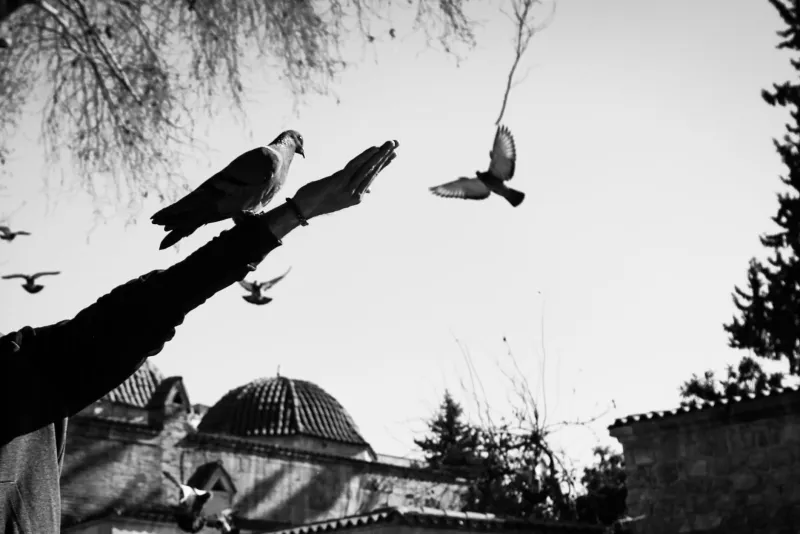
From the street, you'd never know it's happening. But climb three or four flights of stairs in any older İzmir neighborhood — Kadifekale, Ege, maybe a back street off Basmane — and around 4 p.m., you'll start to hear it: a soft whistling from the sky, and a man on the roof clapping his hands, calling his birds home.
This is the world of İzmir's güvercinci — pigeon fliers — a hobby that's equal parts sport, obsession, and inheritance. Think of it as a cross between model aviation and fantasy football, except the equipment breathes, and the rivalries go back decades.
The Rules of the Sky (As Far as Anyone Agrees On)
The core of the hobby is simple to describe and maddening to master. Fliers release their birds from rooftop coops, and the goal is to get another flier's pigeons to join your flock mid-air. When your birds 'turn' a neighbor's — pulling them into your circling column — you win the round. There's betting involved, sometimes small amounts, sometimes amounts people don't mention in front of their wives.
The birds themselves are a specialized Turkish breed, taklacı güvercin — 'tumbler' pigeons — bred over generations to perform acrobatic flips and fly in tight, disciplined formations. A good flock moves like a single organism, spiraling hundreds of meters above the rooftops, responding to whistles, calls, and waving flags.
'It's chess,' says Mehmet, a retired customs officer who's been flying pigeons for 41 years from the same Kadifekale rooftop. 'Except my opponent can see my pieces, and my pieces sometimes betray me.'
An Inheritance You Can't Buy
What strikes most American visitors is how generational this all is. Ask a flier how he got started, and the answer is almost always the same: his father. Or his grandfather. Or an uncle who handed him a squab at age seven and said, 'This one's yours now.'
The coops themselves — often elaborate wooden structures perched improbably on apartment rooftops — are built and passed down like family heirlooms. Some birds come from bloodlines tracked in dog-eared notebooks for fifty years, with lineages more carefully documented than some family trees.
There's a code of honor, too. You don't trap a neighbor's bird and keep it without negotiating. You don't fly your flock when a rival's prize hen is airborne without warning. Break these rules and the whole rooftop community knows by dinner.
A Quietly Vanishing Sky
Here's the bittersweet part: the hobby is fading. Young people move to apartments where rooftops aren't shared spaces. Smartphones compete for attention in ways pigeons can't. The men on the roofs today are mostly in their fifties and sixties, and they know the math.
And yet — it persists. On any given afternoon, look up in the older quarters of the city and you'll see the spirals. The weekly gatherings still happen, coffee still gets poured in tiny glasses, and the debates about whose birds are best never actually end.
For visitors, it's one of those İzmir experiences that doesn't appear in guidebooks but defines the city better than any monument: a community built on patience, sky, and birds that always — eventually — come home.
If you're wandering the hillside neighborhoods near the castle at golden hour and hear whistling overhead, follow the sound. Climb the stairs. Someone will probably pour you a çay and explain everything. Just don't ask Mehmet whose pigeons are best. You'll be there until dark.