Every Evening, Without Fail: Izmir's Golden Hour Ritual and the People Who Live For It

Photo by Photo by Utku Özen | @utku.zn on Unsplash on Unsplash
There are cities where people watch sunsets. Then there's Izmir, where people chase them.
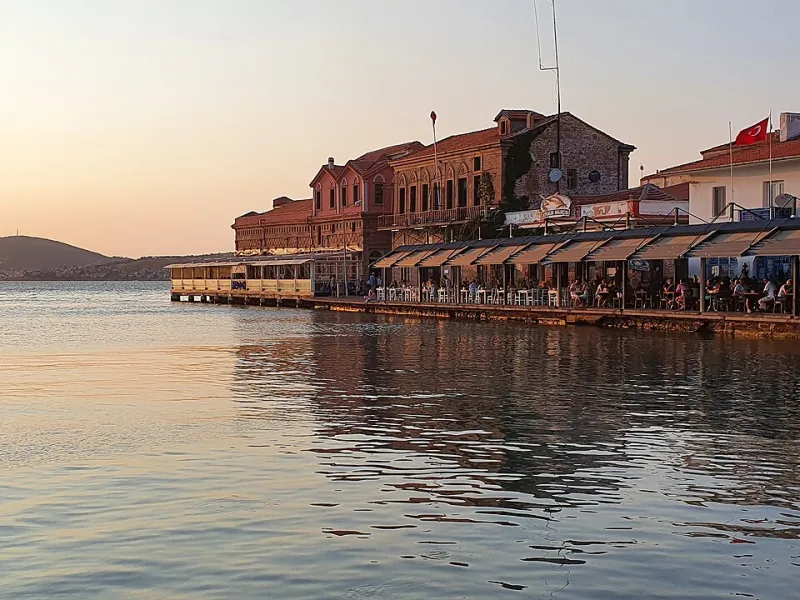
This isn't hyperbole. Ask anyone who's spent more than a few days along the Aegean coast's most spirited city and they'll tell you: golden hour here is practically a civic event. Somewhere between 6 and 8 p.m. — depending on the season — something shifts. Conversations wrap up, tea glasses get drained, and an entire population starts drifting, almost magnetically, toward the water. The kordon, that long, sweeping stretch of waterfront promenade that hugs the Gulf of Izmir, becomes the most important address in town.
For visitors from the US, it might feel a little like the kind of collective ritual we've mostly lost — think small-town summer evenings before everyone retreated indoors. Except here, it hasn't gone anywhere. It's alive, it's loud in the best way, and it happens every single night.
Why the Light Hits Different Here
Izmir sits at just the right angle. The city faces roughly west across the gulf, meaning that when the sun drops toward the horizon, it paints the water in layers — deep amber, then rust, then something almost violet before it all fades out. The Bozdag mountains in the distance catch the last of it. On clear evenings, especially in late summer and early fall, the whole scene looks almost unrealistically beautiful, like someone cranked up the saturation in post.
Locals will tell you this without any false modesty. They know what they have. There's a particular kind of civic pride in Izmir that's tied directly to this geography — the bay, the breeze, the light. It's not unusual to hear someone say, half-joking but also completely serious, that the sunset is the reason they haven't left.
The Spots That Matter
Not all waterfront real estate is created equal, and regulars have strong opinions about where to be.
The Kordon in Alsancak is the main stage — a wide, palm-lined promenade that stretches for several kilometers and fills up fast. This is where you'll find families pushing strollers, couples sharing a single simit, older men playing backgammon on portable boards, and teenagers doing that thing teenagers do everywhere, which is pretending not to care while clearly caring a lot. The cafes and tea gardens along this stretch are prime territory, but the benches facing the water fill up just as reliably.
Karşıyaka, across the bay, offers a different vibe. It's a little quieter, a little more neighborhood-y, and the view back toward the city skyline during golden hour is genuinely stunning. If you're staying in central Izmir, taking the ferry over in the late afternoon and watching the light shift from that side is one of those experiences that doesn't make it onto many itineraries but absolutely should.
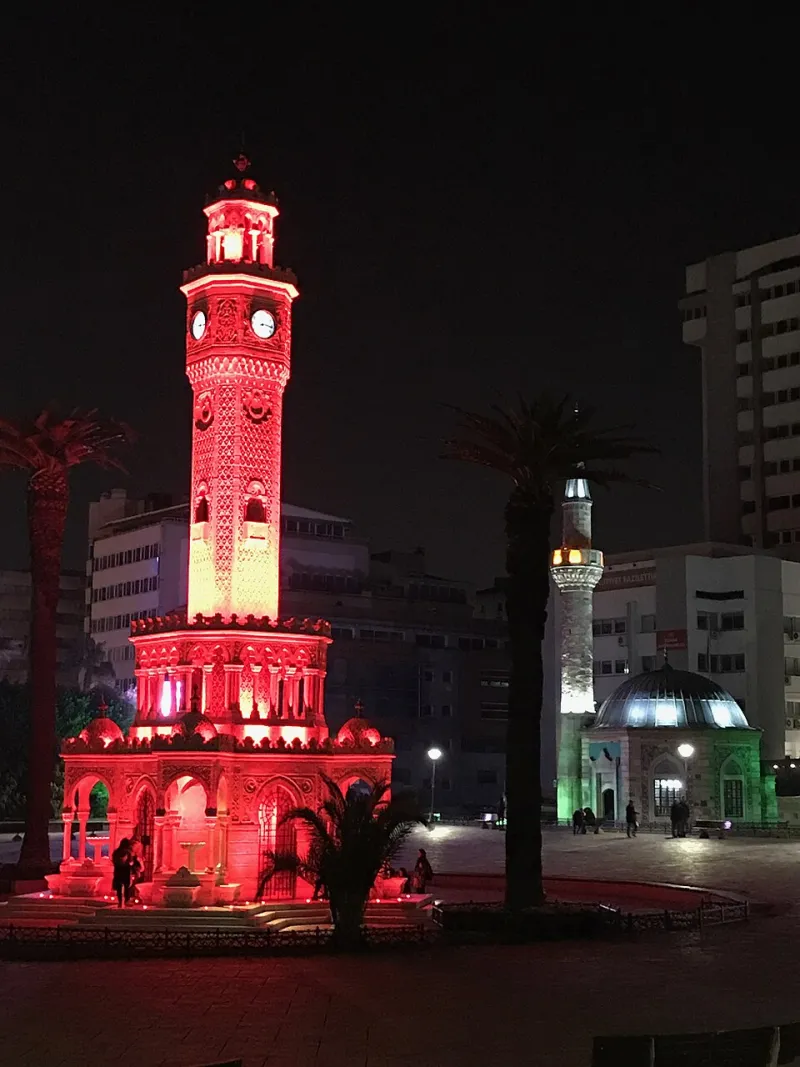
Atatürk Caddesi and the surrounding seafront near Konak has its own crowd — more mixed, more spontaneous. You get street vendors, kids on bikes, the occasional street musician. The Clock Tower nearby gives the whole scene an almost cinematic quality.
Then there are the less obvious spots that locals guard a little more jealously: certain rocky outcroppings south of the main promenade, a few rooftop bars with unobstructed sightlines, the upper terraces of cafes in Alsancak that only regulars seem to know about.
The Unspoken Rules
Here's the thing about Izmir's sunset culture: it has etiquette, even if nobody has written it down anywhere.
You don't rush. This isn't a photo op you squeeze between dinner reservations. People arrive early, settle in, and treat the whole arc of the evening — the hour before, the sunset itself, the slow fade afterward — as a single continuous experience. Showing up, snapping a picture, and bouncing is technically allowed, but it marks you immediately as someone who doesn't get it.
You share space generously. The kordon belongs to everyone. Regulars don't hoard benches or crowd out newcomers. There's an unspoken understanding that the point is collective enjoyment, not individual consumption of a view.
You talk, or you don't. Both are fine. Some groups are loud and social, voices carrying over the sound of water. Others are completely quiet, sitting with a glass of çay and just watching. Neither is considered rude. The sunset accommodates both.
And you stay. At least a little while after. The afterglow — that twenty-minute window when the sky goes from orange to deep blue — is considered by many locals to be the actual best part. Leaving the moment the sun hits the horizon is a little like walking out of a concert after the last song but before the encore.
How to Join Without Being That Tourist
Good news: Izmir is genuinely welcoming to outsiders who come with the right energy. You don't need an invitation or a local contact to participate in this ritual. You just need to show up with the same intention everyone else has — to slow down and actually be present for something.
A few practical notes for US visitors:
Skip the fancy dinner reservation until after 8 p.m. Seriously. Eating before sunset means missing the whole thing. Turks eat late anyway — dinner before 7:30 is early by local standards — so let the sunset anchor your evening rather than interrupt it.
Bring something to drink. A bottle of water, a can of something from a nearby market, or just walk into one of the tea gardens and order çay like everyone else. Sitting with a glass of tea for an hour without feeling like you need to order more is completely normal here.
Leave your earbuds at the hotel. Part of what makes these evenings special is the ambient sound — water, conversation, a distant ferry horn, kids laughing somewhere nearby. Blocking that out to listen to a podcast is a choice, but it's a choice that misses the point entirely.
And take your photos, sure. Just don't let the camera be the reason you're there.
What It Actually Means
For Izmirlis, the golden hour ritual isn't really about the sunset. Or rather, it's not only about the sunset. It's about the daily permission to stop. In a city that moves fast and works hard, the evening waterfront is the built-in pause — the moment when the whole city collectively exhales.
There's something almost countercultural about it, especially from an American perspective. We're not great at doing nothing, at sitting somewhere beautiful and letting time pass without optimizing it. Izmir hasn't lost that skill. And watching a city of four million people practice it together, every single evening, is one of the more quietly remarkable things you'll see anywhere in the world.
The sun will set tonight around 7:45. The kordon will fill up by 7. Find a bench, order something cold, and just watch what happens.