Off-Season Izmir Is the Best Izmir — Here's Why Locals Know It
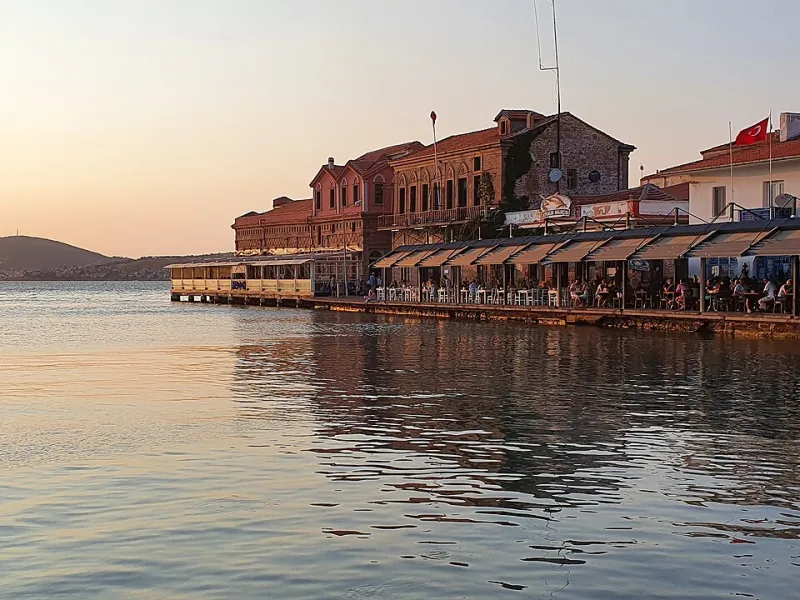
Photo: Antoloji, CC BY-SA 4.0, via Wikimedia Commons
There's a version of Izmir that most American travelers never see. It doesn't show up in the Instagram reels or the travel blogs that breathlessly describe turquoise water and rooftop bars. It exists in the months between November and March, when the Aegean wind picks up, the seafront cafés swap out their plastic chairs for heaters, and the city quietly returns to the people who call it home year-round.
Winter in Izmir isn't what you're picturing. This isn't a city that shuts down or goes gray. Temperatures hover in the 50s and low 60s Fahrenheit — cold enough to feel like a season, warm enough to walk around without a parka. For anyone coming from Chicago, Boston, or the Pacific Northwest, it feels like a mild October that just keeps going. For the locals, it feels like relief.
The City Exhales
Summer tourism in Izmir is real and it's significant. The city draws visitors heading to Çeşme, Alaçatı, and the broader Aegean coast, and that energy — while fun — compresses the city into a version of itself that prioritizes the spectacle. Restaurants pivot toward tourist menus. Prices drift upward. The waterfront along the Kordon becomes a parade route rather than a neighborhood hang.
Winter strips all of that away. The Kordon in January is a completely different experience — older men playing backgammon at tea houses, mothers pushing strollers while the sea churns gray-green behind them, groups of friends huddled at outdoor tables under propane heaters just because they refuse to go inside. It's not picturesque in the postcard sense. It's better than that. It's real.
If you're the kind of traveler who gets bored of curated experiences — who wants to sit somewhere and feel like you actually belong in a place, even briefly — winter Izmir is where that happens.
The Markets That Only Exist When Tourists Don't
One of the most underrated winter rituals in Izmir is the neighborhood pazarı — the weekly street market. These markets run year-round, but in summer, certain ones get discovered and gentrified by the tourist gaze. In winter, they're purely functional, purely local, and completely worth your time.
The Kemeraltı Bazaar, Izmir's sprawling historic market district, transforms in the colder months. The summer heat that makes it feel overwhelming in August is gone, replaced by the smell of roasting chestnuts and the sound of vendors calling out prices for dried figs, olives cured in citrus, and hand-rolled pastries that disappear before noon. You can actually browse without sweating through your shirt. You can stop and talk to someone without feeling like you're holding up a line of tour groups.
Smaller neighborhood markets in districts like Buca and Bornova are even more stripped-back. These aren't destinations — they're just where people buy their vegetables on Tuesday mornings. Showing up as an outsider and navigating them with a bit of Turkish or a lot of hand gestures is one of those low-stakes travel adventures that ends with you carrying a bag of clementines and feeling unreasonably good about yourself.
Indoor Culture Season
Izmir has a serious cultural infrastructure that gets overshadowed by its beach-city reputation. The Izmir State Symphony Orchestra, one of Turkey's oldest, runs a full winter season of performances. The Ahmed Adnan Saygun Arts Center — known locally as AASSM — hosts theater, dance, and contemporary music events that draw serious crowds from across the city.
This is also when Izmir's independent cinema scene comes alive. The city has a genuine arthouse film culture, and winter is when local film clubs and small screening venues fill up with people who actually care about what they're watching. If you time it right, you might catch a screening followed by a two-hour debate at a nearby meyhane that somehow migrates from film criticism to Turkish politics to the best place to get kokoreç at 2am. That's not a hypothetical. That's just what evenings in Izmir can become.
Where the Locals Actually Go
In winter, the social geography of Izmir shifts indoors and inward. The meyhane — the traditional tavern where people gather around plates of mezze, rakı, and conversation — becomes the dominant social institution. These aren't tourist traps with English menus and belly dancing shows. They're loud, warm, slightly chaotic places where the music is live and the night doesn't have a set end time.
Alsancak's backstreets have a concentration of meyhanes that stay genuinely local even as the neighborhood evolves. Karşıyaka, across the bay, has a neighborhood-bar culture that feels more like a tight-knit community than a nightlife district. In winter, when the day-trippers are gone, you can actually feel the difference.
Café culture also deepens in winter. Izmir has always had a strong coffee and tea tradition — the city runs on both — and the colder months push that culture into longer, more leisurely sessions. Showing up at a café in Alsancak or Konak at 3pm and still being there at 7pm isn't unusual. Nobody's rushing you. The concept of camping at a table for hours without ordering every twenty minutes is not just tolerated here — it's expected.
The Practical Case for Going in Winter
Beyond the vibe, there's a straightforward logistical argument for visiting Izmir between November and March. Flights are cheaper. Hotels cost significantly less. The city's best restaurants have open tables. You're not competing with anyone for the good stuff.
Izmir's Adnan Menderes Airport connects through Istanbul with relative ease from most major US hubs, and in winter, you're looking at itineraries that cost a fraction of what you'd pay in peak season. For a city this good, that math is hard to ignore.
The weather, again, is worth emphasizing for an American audience. Izmir in January is warmer than New York in October. You will need a jacket. You will not need to rethink your entire wardrobe. The Aegean doesn't freeze, the hills stay green, and the light — that particular low-angle winter Mediterranean light — does things to the city's architecture that summer sun simply can't replicate.
What You Actually Get
The honest pitch for winter Izmir isn't about checking boxes. You're not going to swim in the sea or eat lunch on a terrace in a sundress. What you're going to do is walk through a city that isn't performing for you, eat food that wasn't designed for your Instagram grid, and spend evenings in rooms full of people who are genuinely glad to be exactly where they are.
That's rarer than you think. And in Izmir, in winter, it's basically the whole point.