More Than a Monument: How the Konak Clock Tower Became Izmir's Unofficial Town Square
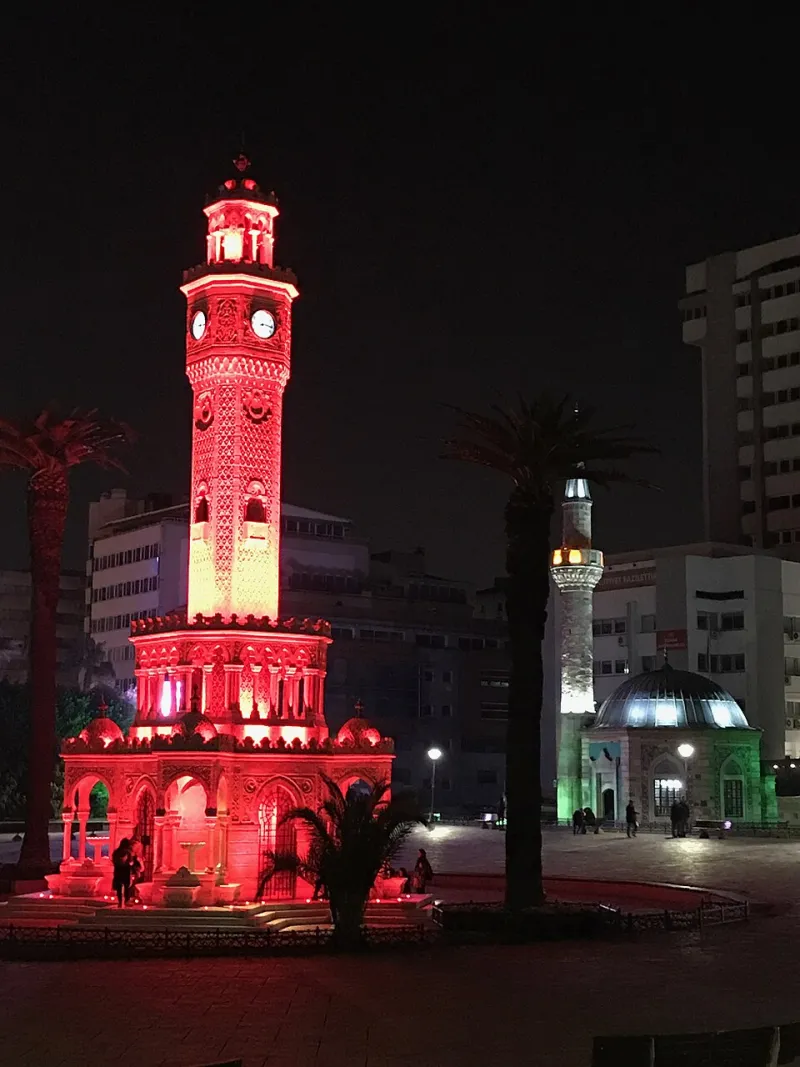
Photo: BSRF, CC BY-SA 4.0, via Wikimedia Commons
There's a running joke among Izmir locals that you can always spot a tourist at Konak Square because they're the ones photographing the clock tower instead of standing under it waiting for someone. For residents, the Saat Kulesi isn't really a thing you look at — it's a place you go to. It's a coordinate. It's shorthand for "I'll meet you there" that doesn't need any further explanation.
If you've spent any real time in Izmir, you already know this. But if you're coming from outside — whether from Istanbul or, say, Indianapolis — understanding why this particular tower matters so much tells you something essential about how this city actually works.
A Little History, Because It Actually Matters Here
The Saat Kulesi was built in 1901, commissioned to mark the 25th anniversary of Sultan Abdülhamid II's reign. It was designed by the French architect Raymond Charles Père and stands about 25 meters tall in the Moorish Revival style — ornate, asymmetrical, and genuinely beautiful in a way that doesn't feel like it's trying too hard. Four fountains gifted by Kaiser Wilhelm II of Germany sit at its base, which gives the whole structure this quietly international backstory that most people walking past have no idea about.
What matters more than the architecture, though, is the location. Konak Square sits right where the city's old commercial heart meets the Aegean shoreline. The government buildings are here. The ferries are here. The oldest neighborhoods fan out in every direction. If Izmir is a wheel, Konak is the hub — and the clock tower is right at the center of that hub.
What "Meeting at Konak" Actually Means
Ask any Izmir native over the age of 40 where they went on their first date, or where they gathered after their university entrance exam results came in, or where they stood when they heard big news. A significant percentage will say some version of "Konak." Not a specific café or a restaurant — just Konak. The square. Near the tower.
This is a distinctly non-American way of organizing social life. In most U.S. cities, you meet at a Starbucks or a specific bar — somewhere with an address and a Yelp page. In Izmir, the landmark is the address. The tower provides the anchor point, and everything else radiates outward from there.
On any given weekday afternoon, you'll find retired men playing tavla on portable boards they've brought from home. You'll find teenagers killing time between school and dinner. You'll find people consulting their phones while scanning the crowd for whoever they're waiting for. The ferry commuters flow through in waves. Street vendors work the perimeter. It's layered and chaotic and completely alive in a way that a lot of planned public spaces never manage to achieve.
The Tower as a Celebration Calendar
What makes the Saat Kulesi especially interesting is how its role shifts throughout the year depending on what Izmir is celebrating — and this city celebrates a lot.
On Cumhuriyet Bayramı (Republic Day, October 29), Konak Square becomes the emotional epicenter of Izmir's festivities. Izmir is known as one of Turkey's most secular, Atatürk-devoted cities, and Republic Day here isn't a low-key national holiday — it's a full-scale civic celebration with parades, concerts, and tens of thousands of people crowding the square waving flags. The clock tower, lit up and surrounded by that crowd, looks like something out of a movie about the best version of a city.
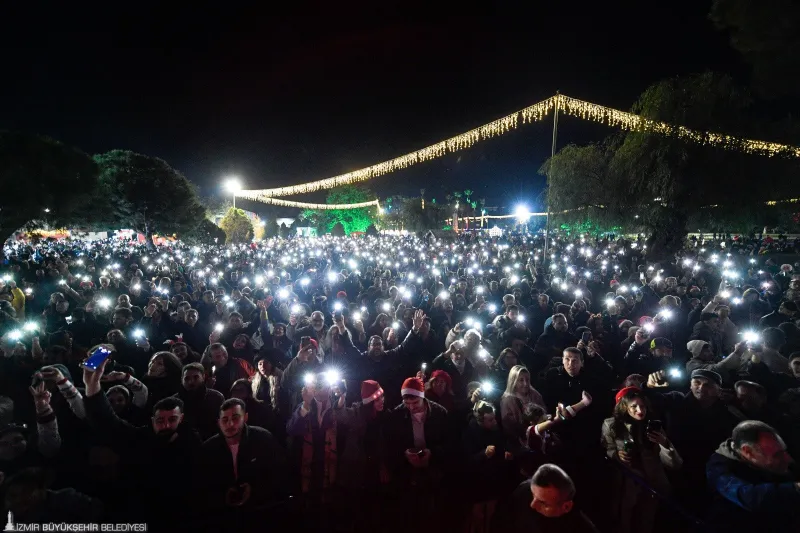
New Year's Eve brings a different kind of energy. Families, couples, groups of friends — everyone seems to end up drifting toward Konak at some point during the evening. There's no single organized event, which somehow makes it feel more authentic. People just... show up. The tower marks midnight the same way it's been marking time for over a century.
During Ramazan, the square takes on a quieter, more contemplative quality in the hours before iftar. Then, as the evening call to prayer sounds, it shifts completely — families spread out, food vendors do brisk business, and the area hums with the specific kind of relief and celebration that comes with breaking the fast together in a public space.
Even during the İzmir International Fair in September, when the city's attention shifts toward Kültürpark, Konak remains a reference point. It's where people start, where they end up, where they say goodbye before catching the last ferry home.
Different Communities, Same Tower
One of the more quietly remarkable things about the Saat Kulesi is how many different versions of Izmir claim it simultaneously. The secular nationalist crowd is here on October 29th. The religious families are here during Ramazan evenings. The young, artsy crowd that populates Alsancak on weekends passes through Konak on their way to and from. The working-class neighborhoods of Bornova and Buca send their commuters through this square every single morning.
In a country where different communities sometimes occupy very different social geographies, there's something genuinely meaningful about a space that belongs to all of them at once — not because anyone decided it should, but because it just evolved that way over 120-plus years.
Why This Matters If You're Visiting
If you're planning a trip to Izmir and you want to understand the city beyond the obvious tourist checklist, spend some real time at Konak Square. Not just the five minutes it takes to get a photo. Sit on one of the benches. Watch the ferries come in. Notice who's there and what they're doing and how they relate to the tower — most of them not even looking at it, just using it as a landmark to orient themselves.
That's the whole thing, really. The Saat Kulesi doesn't demand your attention. It doesn't need to. It's been standing there for over a century, keeping time for a city that has always known exactly where its center is.