Twenty Minutes of Sea, Simit, and Silence: Inside İzmir's Most Beloved Commute
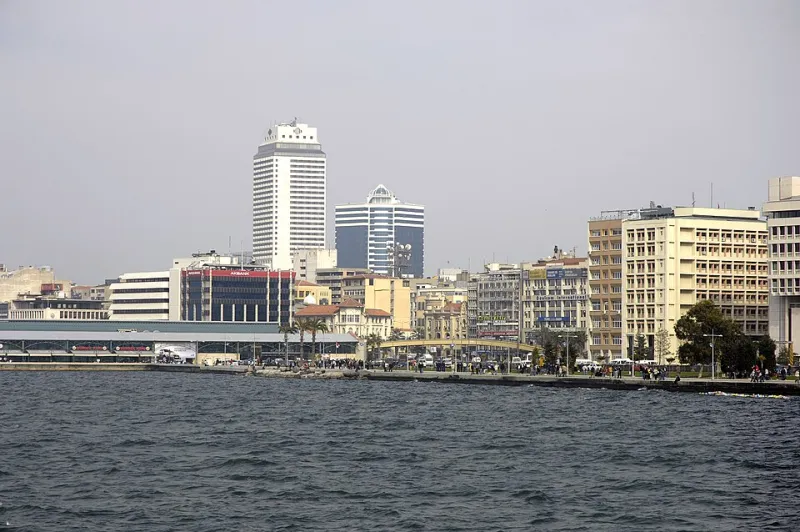
Photo: Dosseman, CC BY-SA 4.0, via Wikimedia Commons
Ask an American what they'd pay to shrink their commute, and you'll get a number. Ask someone in İzmir what they'd pay to stretch theirs, and you might get a strange look — because on the Karşıyaka–Konak ferry line, stretching the commute is kind of the whole point.
İzmir hugs a long bay on Turkey's Aegean coast, and for decades the city's two great halves — the leafy, laid-back Karşıyaka on the north shore and the bustling Konak district on the south — have faced each other across the water. You could drive around. You could take a bus. But the ferry gets you there in about twenty minutes, costs less than a fancy coffee back home, and drops you at the pier with salt in the air and the whole bay glittering behind you.
For a US audience raised on gridlock and Metro delays, that alone sounds like a dream. But the ferry's real magic isn't speed. It's what people do with it.
The Regulars Have Assigned Seating (Unofficially, Obviously)
Spend a morning on the first boat out of Karşıyaka and you'll notice something: people board in clumps, greet each other by name, and head for the same spots they've claimed for years. The open-air deck in the back belongs to the tea drinkers. The covered midsection is for the backgammon crowd. The windward rail, come afternoon, is prime real estate for anyone chasing the sunset.
This isn't tourism. These are nurses, teachers, shopkeepers, retirees — people crossing the bay because they have to, who've quietly turned the crossing into the best twenty minutes of their day. There's a man who brings his own glass and gets his tea refilled by the onboard attendant like he's at a café. There's the duo who play backgammon with the intensity of a championship final, slamming the dice cup down with theatrical outrage at every bad roll. Nobody's checking their phone. Well — almost nobody.
It's the Turkish concept of keyif in action: a small, untranslatable pleasure roughly meaning 'settled contentment.' Americans might call it being present. The ferry is where İzmir practices it daily, at 8:04 a.m., whether it feels like it or not.
Timing Your Life to the Light
Here's the detail that surprises visitors: some riders plan their crossings around the sky, not the schedule. İzmir's ferries run roughly every twenty to thirty minutes, and the evening boats heading north catch the sun as it sinks behind the city's southern hills, painting the whole bay in that famous golden light the Kordon waterfront is known for.
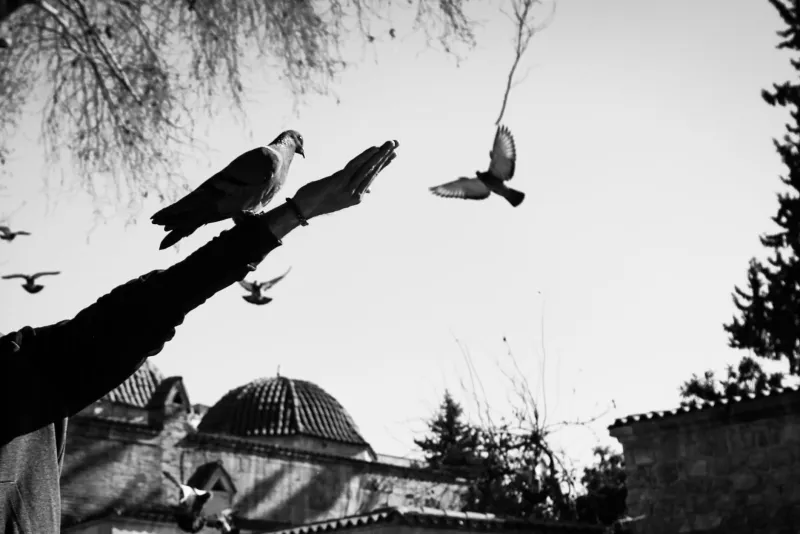
So there's an unwritten race to the western rail when the sun starts dropping. Cameras come out. Conversations pause mid-sentence. The seagulls — eternal freeloaders — trail the boat hoping someone will toss a piece of simit, the sesame-crusted bread ring that's basically Turkey's bagel. Someone always does.
If you've ever watched the crowd gather at a rooftop bar in Chicago or LA for golden hour, imagine that, but on a working commuter ferry, for the price of a transit token, with grandmothers and teenagers and dockworkers all sharing the view.
Why the 'Slow Commute' Works
Urbanists in the US talk a lot about 'third places' — the cafés, parks, and libraries that aren't home or work. İzmir's ferries function as a third place that moves. Twenty minutes is long enough to decompress, short enough to never feel like a burden. There's no traffic to fight, no road rage, no dashboard. Just water, wind, and a city that unfolds as you cross it — the hillside neighborhoods of Karşıyaka on one side, the clock tower and the Konak waterfront on the other.
Compare that to the average American commute — now pushing nearly half an hour each way, mostly alone in a car — and the contrast gets almost uncomfortable. İzmirians aren't more virtuous than Americans. They just have better infrastructure for doing nothing for twenty minutes, and a culture that doesn't apologize for enjoying it.
There's also a practical secret: for many trips, the ferry genuinely is faster than driving around the bay, especially at rush hour. So the scenic option isn't a luxury here. It's the sensible one. That's the part US transit advocates keep pointing to when they cite İzmir as an example — when the pleasant way and the efficient way are the same way, everything changes.
How to Do It Like a Local
If you're visiting, here's the playbook. Buy an İzmirim card at any pier kiosk — it works on ferries, buses, and the metro. Skip the indoor cabin unless the weather's rough; the open deck is where the experience lives. Grab a simit from a cart near the pier and a tea from the onboard counter (yes, they serve tea on a ferry, and yes, it's good).
Then do the hardest thing for most American travelers: nothing. Watch the gulls. Watch the city slide by. Let a stranger's backgammon game become your entertainment.
The Karşıyaka–Konak line is the classic crossing, but any of the bay's ferry routes delivers the same effect. Ride it at sunset if you can — locals will tell you the evening light on the water is İzmir showing off, and they're not wrong.
Somewhere between the dice slam and the last sip of tea, you'll get it. The ferry was never really about getting across the bay. It's the twenty minutes in between that İzmir refuses to give up — and honestly, once you've had them, you'll understand why.