Forty-Five Minutes and a Whole Different Life: The Sunday Migration to Urla
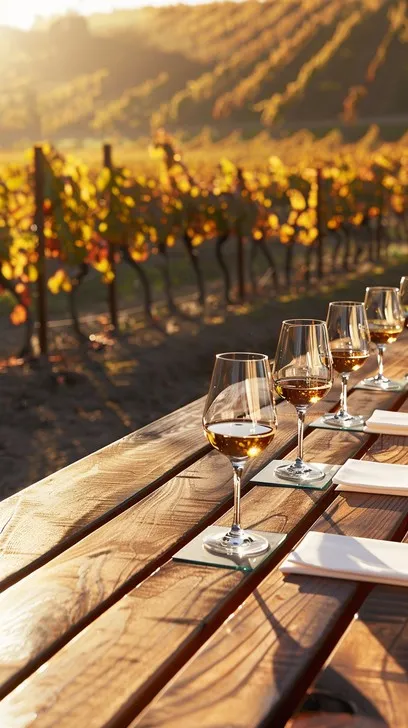
Photo: vineyard rows Aegean coast Turkey sunset wine tasting, via images.stockcake.com
Ask anyone in Izmir what they're doing this weekend and watch the answer come out before you finish the question: Urla'ya gidiyoruz. We're going to Urla.
It's said the way New Yorkers say "we're going upstate" — half explanation, half identity statement. And like going upstate, the trip itself is short. Forty-five minutes from the city center, the apartment blocks thin out, the road starts curling through olive groves, and suddenly you're somewhere that smells like sun-baked earth and grape leaves instead of sea salt and diesel.
But calling it a day trip undersells it. What Izmir locals have built on the Urla peninsula over the past fifteen years is closer to a weekly pilgrimage — a full circuit of wineries, farm stalls, and seafood docks that families repeat so faithfully it functions like a religion with better snacks.
The Route Is the Tradition
We tagged along with the Demirtaş family — Mehmet, his wife Elif, their two kids, and Mehmet's mother, who has opinions about everything — on a recent Sunday to understand how the ritual actually works.
It starts early, but not that early. "If we leave by ten, we're ahead of the crowd," Mehmet says, which turns out to be optimistic. By the time the car rolls onto the highway toward Urla, the roadside stands are already doing business.
And those stands matter. The first stop is never optional: a pull-off along the road where local farmers sell whatever the season offers. In October, it's pomegranates the size of softballs and the year's new olive oil, cloudy and peppery, still warm from the press. In spring, it's artichokes and fresh almonds. Elif buys honey from the same vendor every week. "Twenty years," she shrugs. "What am I going to do, try someone else's honey?"
This is the thing Americans should understand about the Urla run: it's not tourism. It's a grocery run, a social hour, and a scenic drive fused into one repeating loop. The stops don't change. That's the point.
Wine Country Nobody Warned You About
Here's a fact that surprises most US visitors: Turkey makes serious wine, and a surprising amount of the good stuff comes from this exact peninsula. Urla's vineyard scene has exploded over the last decade — boutique producers, estate tasting rooms, and indigenous grapes with names you've never seen on a US shelf.
Look for Bornova Misket, a crisp, aromatic white that tastes like it was invented for a hot Aegean afternoon (because it basically was), and Çalkarası, a light, food-friendly red. Several of the area's wineries offer tastings by appointment; a few run restaurants on-site where lunch stretches lazily into late afternoon.
Mehmet's mother does not drink wine, but she has a standing arrangement at one estate anyway: she brings them jars of her own pickled vegetables and leaves with grapes. Everyone wins. This is also very Izmir.
Practical tip for American visitors: most wineries require or strongly prefer reservations, especially September through November. Rent a car — rideshares don't cover the peninsula well — and note that if you're tasting, someone needs to be the designated driver. Locals solve this by making the wine stop the last stop.
Lunch Is the Whole Point
Ask ten Izmir families about their Urla ritual and nine of them will describe the same climax: a long, chaotic seafood lunch at one of the small harbor towns dotting the coast.
The formula is simple and unbeatable. You sit at a plastic-clothed table near the water. Someone brings a plate of cold mezes — sea beans (a salty coastal green the Turks call deniz börülcesi), smoky eggplant, yogurt with herbs. Then you walk to the fish display and point at what looks good. It will be what was swimming that morning. It gets grilled with almost nothing on it, because it doesn't need anything.
The kids run around. The grandmother argues with the waiter about the bill. Nobody checks the time. "In the city, lunch is forty minutes," Mehmet says. "Here, lunch is the day."
The Olive Oil Detour
If your Sunday falls between late October and December, you're in luck: it's harvest season, and the peninsula's olive mills open their doors. Some small producers let visitors watch the pressing — the green-gold paste, the centrifuges, the first taste of oil so fresh it bites the back of your throat.
Even off-season, the area's farm-to-table scene is worth the drive. A handful of Urla restaurants have made national news for their gardens and tasting menus, and unlike Istanbul's famous reservations wars, you can often still get a table with a day's notice.
Why It Stuck
Every city has a weekend escape. What makes Urla different is how complete it is — wine, oil, fish, produce, sea views — packed into a drive shorter than a typical American commute.
"Istanbul people go to their summer houses," Elif says, loading another crate of pomegranates into the trunk. "We don't need a second home. We have a second Saturday."
She means Sunday. Nobody corrects her. On the Urla roads, the days blur together in the best way.
If You're Going
- When: September to November is harvest season — wine, olives, and perfect weather all at once. Spring is gorgeous and less crowded.
- How long: One long day works, but an overnight turns a good trip into a great one. The peninsula has small boutique hotels and guesthouses.
- Don't skip: A roadside produce stand, one seafood lunch by the water, and at least one winery tasting. That's the local loop.
- Pack home: Olive oil (new harvest is October onward), honey, and dried herbs. Your kitchen will thank you.