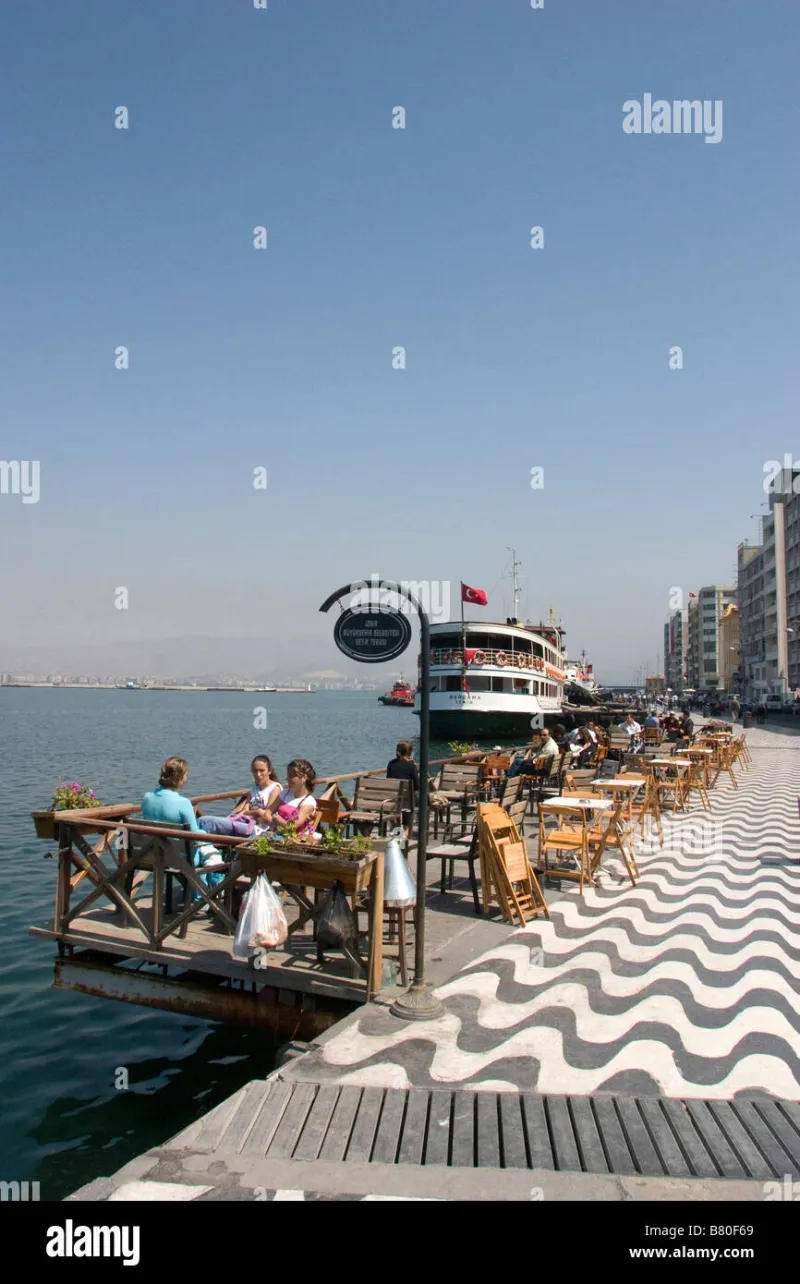
Nine Notes, One City: The Anthem İzmir Can't Stop Singing
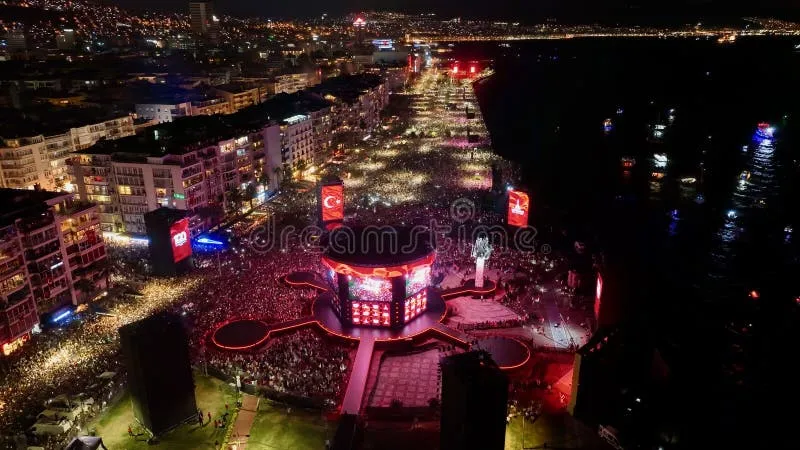
Photo: Izmir Kordon seafront crowd singing celebration evening, via thumbs.dreamstime.com
Ask an American to hum their city's official song and you'll mostly get blank stares. Ask someone from İzmir about theirs and you'll get a full-throated rendition, probably before you've finished the question.
That song is 'İzmir Marşı' — the İzmir March — and it functions less like a municipal anthem and more like a secret handshake. Play the opening bars anywhere in the city, at a wedding, a football match, a birthday party in Karşıyaka, and watch what happens. Grown adults will stand up. Teenagers will scream the lyrics ironically, then completely sincerely, often within the same verse.
No other Turkish city has anything quite like it. And the strange part? It wasn't even supposed to be about civic pride.
Born From the Military, Adopted by the Masses
Here's the twist most tourists never learn: the march was written in 1932, a decade after the War of Independence, and its original lyrics were — let's be honest — pretty fiery. The song celebrates the Turkish army's liberation of İzmir in September 1922, and its early verses lean hard into martial imagery. It was propaganda-adjacent, a victory march meant to stir patriotic blood, not to soundtrack a cousin's engagement party.
So how did a nationalist military march become the unofficial anthem of a city famous for being relaxed, cosmopolitan, and only half-interested in solemnity?
The answer, locals will tell you, is İzmir itself. This is a city that absorbs things and makes them its own. The march started as a hymn to İzmir and slowly became a hymn by İzmir — about the sea, the palm-lined Kordon, the feeling of being from somewhere you'd never want to leave. The militarism faded into the background. What stuck was the melody, which is genuinely, annoyingly catchy, and the refrain that names the city like a love letter.
The Ironic Reclamation
If you spend any time around İzmir's younger crowd, you'll notice something funny about how they use the song. It gets deployed with a wink — blasted at house parties, chanted on the ferry to Karşıyaka, sung badly and on purpose at karaoke. The irony is the entry point.
But stay in the room long enough and the irony thins out. By the second or third chorus, everyone is just... singing it. Sincerely. That's the trick of a real civic anthem: it can survive being laughed at, because the affection underneath is load-bearing.
Compare that to Istanbul, a city so big and porous that it resists a single song, or Ankara, whose identity is tangled up with the state itself. İzmir's anthem works precisely because it's small-scale. It's not about the nation. It's about here. For a US reader, the closest analogy might be a stadium staple like "Sweet Caroline" at Fenway — a song that means nothing until you're standing inside a specific community, at which point it means everything.
Weddings, Stadiums, and One Very Loud Ferry
The march lives a busy social life. At Aegean weddings, it tends to appear late in the night, when the dancing has gotten loose and the band knows exactly what the room wants. At Göztepe and Karşıyaka matches, it surfaces in the terraces, remixed by supporter groups with drums and a fair amount of creative lyric editing.
And then there's the ferry — arguably its most charming venue. When İzmir's football clubs win something significant, passengers on the Karşıyaka–Konak crossing have been known to break into the march as the boat pulls away from the pier, singing over the engine noise with the skyline sliding past. It's unorganized, unannounced, and completely normal here.
A Listener's Guide: The Best and Weirdest Versions
If you want to understand the song's strange grip on this city, work through its discography like a tasting flight:
- The classic military band version — brass-heavy, brisk, a little stern. This is the song's origin story in audio form.
- The stadium rendition — slower, rougher, thousands of voices dragging the tempo like taffy. Emotionally devastating if you let it be.
- The rock covers — local bands have been reworking it for decades, some faithfully, some with electric guitars and an attitude problem.
- The wedding band version — usually in a folk-inflected key, played at a volume that suggests the clarinetist has a grudge.
- The ironic pop remixes — a staple of İzmir's underground scene, where the march gets mashed up with everything from Anatolian funk to, reportedly, at least one techno edit that would make the original composers file a complaint.
What It Says About This City
Strip away the history and the irony, and 'İzmir Marşı' endures for a simple reason: İzmir is a city with a fierce, slightly defensive local pride. It knows it's not the capital and not the biggest, and it has decided, loudly, that it doesn't care. The march is that attitude set to music — a way of saying we're not Istanbul, we're not Ankara, we're us, and we like it here.
Every city has a skyline. This one has nine notes that everyone knows. Stand on the Kordon some evening, around the time the light turns gold, and there's a decent chance you'll hear them drifting from somewhere — a café radio, a passing car, a group of kids who are definitely being ironic.
Definitely.