You're Invited — Now What? A Real Insider's Guide to Navigating Izmir Like a Local
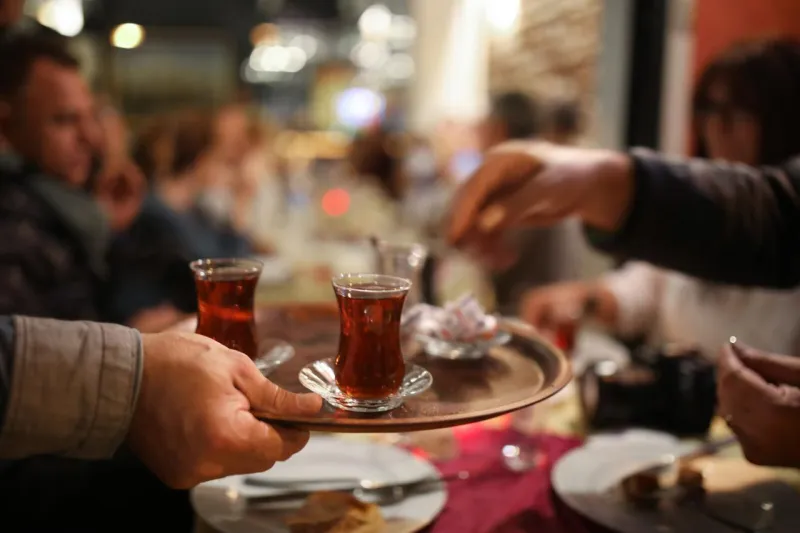
Photo: Turkish tea ceremony Izmir locals gathering neighborhood cafe warm hospitality, via img.turkiyetoday.com
Somewhere between your third glass of tea and the moment a complete stranger insists on walking you six blocks out of their way to make sure you find the right bus stop, it hits you: Izmir operates by a completely different social rulebook than anything you've encountered back home. It's not confusing in a bad way. It's just — different. Warmly, sometimes overwhelmingly, beautifully different.
American travelers tend to arrive in Izmir prepared for the sights. The ancient ruins at Ephesus, the shimmering Kordon waterfront, the labyrinthine chaos of the Kemeraltı Bazaar. What they're almost never prepared for is the people — and specifically, for just how genuinely, persistently welcoming those people are going to be.
So consider this your honest, no-fluff guide to understanding what's actually going on beneath the surface of Izmir's famous hospitality, and how to engage with it in a way that feels real rather than performative.
Tea Is Never Just Tea
Let's start with the most fundamental building block of social life in Izmir: çay. Turkish tea. The small tulip-shaped glass of deep amber liquid that will be placed in front of you approximately every forty-five minutes regardless of what you're doing, where you are, or whether you asked for it.
Here's what you need to understand: refusing tea in Izmir is technically allowed, but it sends a message. Not an aggressive one — nobody's going to be offended — but a subtle social signal that you're not quite ready to settle in and connect. Accepting tea, on the other hand, is an agreement to slow down. To sit. To talk, or at least to be comfortably present.
In American culture, we're conditioned to treat hospitality as transactional. Someone offers you something; you either accept or decline based on whether you actually want it. In Izmir — and in Turkish culture broadly — the offer of tea is less about the tea and more about the relationship. It's an invitation into someone's time and attention. Saying yes is how you say, I see that invitation and I accept it.
Practical tip: if you genuinely don't want more tea, placing your hand briefly over the top of your empty glass is a polite, universally understood signal. Locals use it too.
The Neighborhood Is the Social Unit
One thing that tends to surprise American visitors is how strongly Izmirliler identify with their specific neighborhood — their mahalle — rather than with the city as a whole. Ask someone where they're from and they'll often say Karşıyaka, or Alsancak, or Bornova before they say Izmir. These aren't just postal zones. They're communities with their own personalities, their own local legends, their own bakeries that everyone agrees are the best bakeries.
If you get invited into a neighborhood gathering — a street celebration, a seasonal festival, a spontaneous tea-and-backgammon situation in someone's courtyard — go. Seriously, just go. These moments are not on any tour itinerary, and they're the ones you'll still be talking about years later.
A few things to know before you show up: bring something small. A box of lokum (Turkish delight), a bottle of local wine from the Aegean region, or even a simple pastry from a nearby bakery. It doesn't need to be expensive. The gesture is what matters. And when the food comes out — and it will come out, in quantities that defy the apparent size of the kitchen — do not be shy about eating. Leaving food untouched is one of the few ways you can genuinely make a host feel like they've failed you.
What "No" Actually Means (Sometimes)
This one takes some calibration. In certain social situations in Izmir, a first refusal isn't necessarily a final answer — it's closer to a polite formality. If someone offers you more food and you say "no thank you" once, they may offer again. This isn't pushy. It's a cultural acknowledgment that guests sometimes decline out of politeness rather than genuine preference.
The way to signal that you're genuinely done is warmth plus firmness: "It was absolutely wonderful, I truly can't eat another bite" while patting your stomach tends to communicate the message clearly and kindly. Locals understand this. They do it too.
That said, this dynamic is specific to food and hospitality situations. In professional or transactional contexts — shopping in a market, negotiating a taxi fare, declining an unsolicited tour guide — a clear, polite "no" is perfectly normal and respected.
Seasonal Celebrations and Why You Should Care
Izmir's social calendar is packed with celebrations that most tourists completely miss because they're not listed in guidebooks. They're just — things that happen, neighborhood by neighborhood, season by season.
In spring, the Hıdırellez festival marks the arrival of warmer weather with outdoor gatherings, music, and a tradition of writing wishes on paper and tying them to trees or rose bushes. It's joyful and communal in a way that's hard to describe — imagine a block party crossed with a wishing well crossed with a really good potluck.
During Ramadan, the evenings in Izmir transform completely. The streets fill up after sunset for iftar — the meal that breaks the daily fast — and even if you're not Muslim, you'll find yourself caught up in the energy of it. Many families and restaurants welcome outsiders to join iftar tables, and the experience of breaking bread (literally) with strangers in a moment that carries deep personal meaning for them is one of those travel experiences that quietly changes you.
In summer, neighborhood associations organize open-air cinema nights, folk music performances, and food markets that are completely free and completely wonderful. You just have to be paying attention.
On Being a Guest in Someone's City
The deepest thing to understand about Izmir's hospitality culture is that it comes from a genuine philosophical place. There's a concept embedded in Turkish culture — misafirperver — that roughly translates to "friend of the guest." Being misafirperver isn't just being nice to visitors. It's a value system that says the way you treat a stranger reflects the quality of your character and your community.
When an Izmir local goes out of their way for you, they're not expecting anything back. They're not angling for a tip or a five-star review. They're expressing something about who they are and what their city stands for.
The best way to honor that? Be present. Put the phone down occasionally. Learn five words of Turkish — merhaba (hello), teşekkür ederim (thank you), çok güzel (very beautiful) — and deploy them genuinely. Make eye contact. Laugh at things. Ask questions.
Izmir's locals aren't looking for you to be perfect. They're looking for you to be real. Show up that way, and this city will give you more than you came looking for.