Fork in the Road: Why Izmir's Street Food Scene Is Leaving Istanbul in the Dust
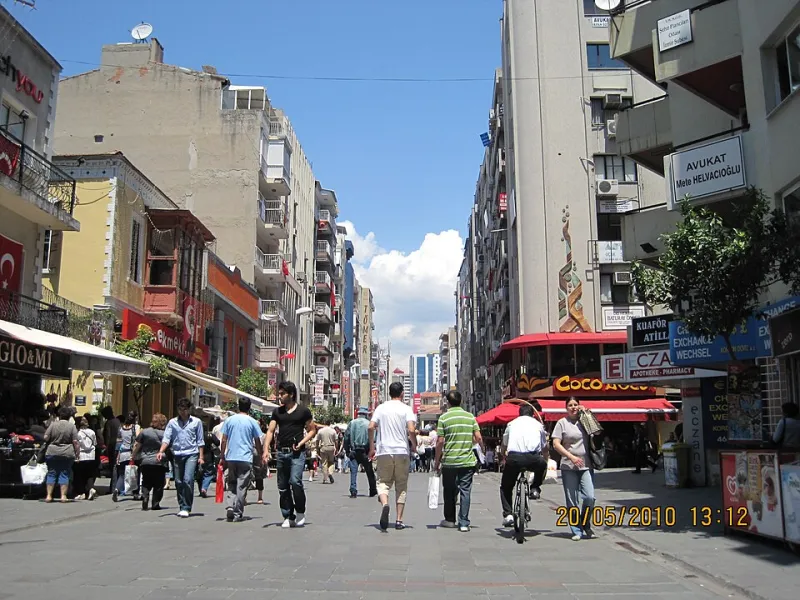
Photo: Bir_Ege_Hikayesi ©, CC BY 3.0, via Wikimedia Commons
If your mental image of Turkish street food begins and ends with a döner kebab wrapped in flatbread, Izmir is about to completely rewire your brain. This sun-drenched city on Turkey's Aegean coast has been quietly — and sometimes not so quietly — building one of the most inventive, boundary-pushing food cultures in the entire Mediterranean. And if you're an American foodie who's been daydreaming about a culinary escape that's more Portland-meets-Marrakech than predictable tourist trail, Izmir deserves a serious spot on your radar.
A City Shaped by Spice Routes and Sea Breezes
You can't really understand Izmir's food without understanding its history. For centuries, this city — known in antiquity as Smyrna — was one of the most cosmopolitan trading ports in the known world. Greeks, Armenians, Levantine merchants, Sephardic Jews, and Ottoman traders all called it home. Every single one of them brought recipes, techniques, and ingredients that slowly, generation by generation, got folded into the local culinary DNA.
That layered history is why Izmir's food tastes different from anywhere else in Turkey. There's a lightness to it, a Mediterranean openness that you don't always find in the heavier, more meat-forward cooking of central Anatolia. Olive oil is practically a religion here. Fresh herbs show up everywhere. And the local produce — figs, artichokes, wild greens, Aegean sea bass — is so good that even the simplest preparations end up tasting extraordinary.
The Vendors Who Are Rewriting the Rules
Walk through the Kemeraltı Bazaar on any given morning and you'll run into Mehmet, a third-generation boyoz maker whose family recipe has stayed basically unchanged since his grandfather was selling these flaky, sesame-scented pastries to dock workers in the 1950s. But step two streets over and you'll find a twenty-something vendor who's stuffing boyoz with roasted beet hummus and crumbled Aegean goat cheese, handing them out of a repurposed wooden cart with a hand-painted logo.
That contrast — deep tradition sitting right next to fearless reinvention — is exactly what makes Izmir's food scene so electric right now.
Chef Deniz Akar, who runs a small but wildly popular tasting-menu spot near the Kordon waterfront, puts it simply: "In Izmir, we don't feel pressure to be 'authentically Turkish' in the way Istanbul sometimes does. We feel pressure to be delicious. That's actually a much harder standard to meet."
His current tasting menu features a course built around çiğ köfte — traditionally a raw meatball dish, now almost always made vegetarian — that he's reimagined as a chilled tartare with sumac gel, pickled green plum, and a dusting of dried rose petals. It sounds chaotic. It tastes like a revelation.
Dishes You Need to Track Down
So what should you actually be eating? Here's a cheat sheet for the uninitiated.
Kumru is the sandwich that Izmir invented and the rest of Turkey is still trying to copy. Built on a slightly sweet, sesame-topped roll, it's loaded with sucuk (spiced Turkish sausage), kashar cheese, tomatoes, and peppers. The version at the legendary Şambali stalls near Çeşme is the gold standard, but newer spots are doing things like slow-braised lamb neck kumru and even a breakfast version with a fried egg and herb butter that'll make you question every brunch decision you've ever made.
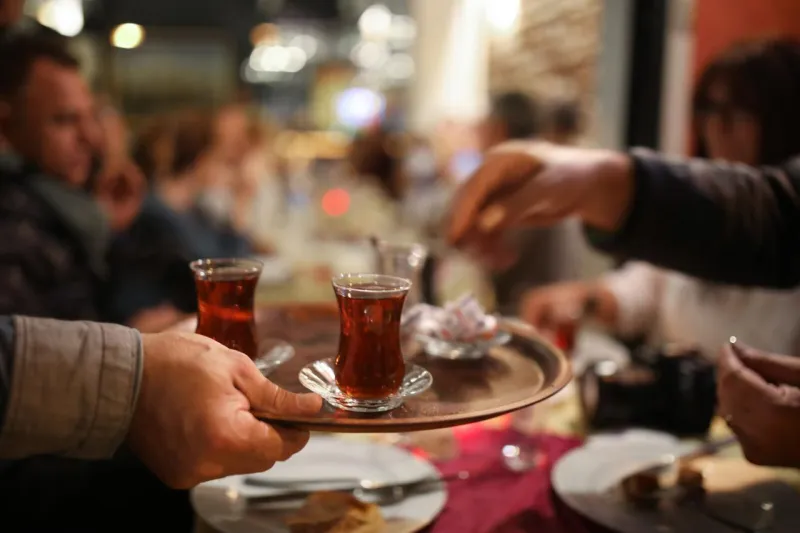
Gevrek looks like a New York pretzel had a fling with a sesame bagel. It's crunchier, more intensely sesame-flavored, and traditionally eaten for breakfast with a small cube of white cheese and a glass of strong tea. Some vendors are now pairing it with tahini-date spreads or za'atar cream cheese, which honestly works better than it has any right to.
Lokma is Izmir's beloved fried dough, soaked in syrup and handed out free in the streets during religious holidays and neighborhood celebrations. It's the kind of food that comes with a story — families commission lokma distributions to mark everything from a new baby to the anniversary of a loved one's passing. You'll stumble across a lokma stand completely by accident, and that's exactly how it's supposed to work.
Midye dolma — stuffed mussels filled with spiced rice, pine nuts, and currants — are technically found all over Turkey, but in Izmir they're treated with a reverence that borders on spiritual. The best vendors source their mussels daily from local Aegean fishermen, and the spice balance is noticeably different here: less sweet, more acidic, with a brightness that matches the city's personality.
Why American Foodies Are Starting to Pay Attention
For a long time, Istanbul got all the culinary love from Western travelers. And fair enough — it's an extraordinary food city. But a growing number of American food writers, travel bloggers, and James Beard-adjacent types have started quietly redirecting their Mediterranean itineraries to include a few days in Izmir, and the word is spreading fast.
Part of the appeal is practical: Izmir is more affordable than Istanbul, less crowded, and significantly easier to navigate. But the bigger draw is the feeling that you're discovering something before the masses arrive. The restaurant scene here still has that underground energy — the kind where the best meal of your trip might happen at a place with six plastic chairs and no English menu, where the chef comes out personally to explain every dish because she's genuinely excited about what she's made.
Food tours specifically focused on Izmir's street scene have started popping up, many led by local culinary students and young chefs who want to share their city's food culture on their own terms. These aren't the sanitized, hotel-approved tours. They take you into the actual neighborhoods — Bornova, Buca, Karşıyaka — where real Izmirliler eat every day.
The Bigger Picture
What's happening in Izmir's food scene isn't just about trendy dishes or photogenic plates. It's about a city that's always been a crossroads — of cultures, of trade routes, of ideas — finally getting recognized for the culinary powerhouse it's always been.
The chefs and vendors here aren't trying to out-Istanbul Istanbul. They're doing something more interesting: building a food identity that's rooted in their specific place, their specific history, and their specific ingredients. And that, more than any single dish, is what makes Izmir worth the flight.
So yes, you can get baklava here. Great baklava, actually. But if that's all you're looking for, you're already missing the point.