Alsancak vs. Karşıyaka vs. Everyone Else: The Great Izmir Neighborhood Debate
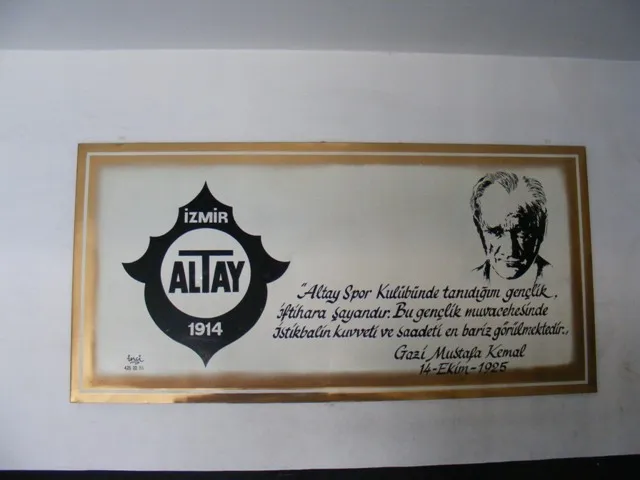
Photo: Umi1903, CC BY-SA 3.0, via Wikimedia Commons
Every city has its neighborhood rivalries. New York has Brooklyn versus Manhattan. Los Angeles has the Eastside versus the Westside. Izmir has something more intimate and arguably more heated — a city of about three million people divided into districts that each carry their own mythology, their own food culture, their own very specific idea of what it means to be a real Izmirli.
This isn't a neutral guide. Those exist, and they're fine, and they'll tell you that every neighborhood has something to offer and that it depends on what you're looking for. That's true and also completely useless. We're going to tell you what locals actually think, what the debates actually are, and — yes — where we'd stake our own reputation.
Buckle up.
Alsancak: The Neighborhood That's Too Aware of Itself
Let's start with the obvious one. Alsancak is Izmir's most internationally legible neighborhood. It's where the bars are, where the festivals spill into the streets, where you'll find craft beer next to a 90-year-old meyhane that hasn't changed its menu since Atatürk was alive. It's walkable, it's lively, and it photographs beautifully.
It's also, depending on who you ask, in the middle of an identity crisis.
Alsancak's Kıbrıs Şehitleri Caddesi — the main commercial strip — has been creeping toward a version of itself that serves the idea of Alsancak more than the actual neighborhood. Rents have climbed. Some of the old-school esnaf (artisan shopkeepers) have been replaced by places that sell artisanal candles or specialty coffee at prices that feel imported from Brooklyn. Longtime residents will tell you this with genuine sadness.
And yet. The backstreets still hold. The meyhane culture is real and loud and completely alive. The Kordon waterfront on a weekend evening — people walking, arguing, laughing, kids running, old couples moving slowly — is one of the great free spectacles in any Mediterranean city. Alsancak earned its reputation. It's just learning to live with what that reputation costs.
The verdict: Best for first-timers and anyone who wants the full-spectrum Izmir experience without having to work for it. Just push past the main strip.
Karşıyaka: The Neighborhood That Won the Argument Without Trying
If Alsancak is Izmir's face, Karşıyaka is its heart — or at least, that's what everyone who lives in Karşıyaka will tell you, loudly, with complete conviction.
Here's the thing: they're not wrong.
Karşıyaka sits across the bay from central Izmir, accessible by ferry in about 20 minutes, and that geographic separation has preserved something important. The neighborhood has its own commercial street, its own café culture, its own rhythm that doesn't revolve around tourist season or weekend influx from other districts. People who live in Karşıyaka tend to stay in Karşıyaka. That insularity sounds like a flaw until you actually spend time there and realize it's the source of everything that makes it great.
The food scene in Karşıyaka is quietly exceptional. Not exceptional in a way that generates food blog coverage — exceptional in the way that means the börek place on the corner has been run by the same family for forty years and they don't need your review. The tea gardens along the waterfront in Karşıyaka are where locals go when they want to actually relax rather than be seen relaxing. That distinction matters enormously.
The gentrification debate barely touches Karşıyaka, and locals are proud of that. It's not that the neighborhood is stuck in time — there are new cafés, new restaurants, new energy. But the bones haven't shifted. The identity held.
The verdict: The best neighborhood in Izmir for people who want to understand what Izmir actually is when it's not trying to impress anyone.
Konak: The One Everybody Forgets to Take Seriously
Konak is Izmir's historical and administrative core — the Clock Tower, the Kemeraltı Bazaar, the Agora, the ferry docks. It's where the city started and where its official identity still lives. It's also chronically underrated as a place to spend actual time.
The knock on Konak is that it's a daytime-only proposition. The bazaar closes, the government buildings empty, and the neighborhood quiets in a way that Alsancak or Karşıyaka never does. That's partially true. But it misses what Konak offers during those daylight hours — which is access to the most layered, historically dense urban environment in the city.
Kemeraltı alone could occupy an entire week of exploration. This isn't a cleaned-up tourist bazaar. It's a working commercial district that has operated continuously for centuries, where you can buy a smartphone case, get your shoes resoled, find antique Ottoman silverware, eat the best midye dolma (stuffed mussels) of your life, and stumble into a hans — the old caravanserai courtyards — that most visitors walk right past.
The food culture in Konak skews traditional in ways that Alsancak's restaurant scene doesn't always manage. This is where you find the real lokanta lunch culture — counter-service places with rotating daily dishes, packed with workers at noon, empty by 2pm, and absolutely worth the logistical effort.
The verdict: Go for the history, stay for the food, leave before dark. And come back the next day.
Bornova: The Dark Horse
Bornova doesn't come up in most neighborhood conversations, which is exactly why it deserves to. Home to Ege University, one of Turkey's major research institutions, Bornova carries a student energy that gives it a scrappiness and creativity the more polished neighborhoods lack.
The bar scene in Bornova is cheaper, louder, and less self-conscious than Alsancak. The music venues are smaller and more adventurous. The street food around the university district operates on a budget that makes every other neighborhood look overpriced. There's also a genuinely interesting arts and music underground in Bornova that doesn't get exported to the broader Izmir conversation — it just exists for the people who live there.
Bornova also has the Levantine mansions — the old European merchant houses from the 19th century — that remind you this city was once a major cosmopolitan trading hub with a genuinely international population. That history sits quietly in Bornova in a way that doesn't feel performative.
The verdict: For travelers who've done Alsancak and Karşıyaka and want something with more edge and less polish.
So Who Wins?
Karşıyaka. That's our answer and we're keeping it.
Not because it's the most exciting or the most historically significant or the most photographable. Because it's the neighborhood that has most successfully resisted becoming a version of itself for external consumption. It's Izmir in the way that a city is most itself when nobody's watching — a little proud, a little stubborn, completely certain it doesn't need to explain anything to you.
That said, the real answer — the one every Izmirli will give you after the initial bravado fades — is that the city is the sum of all of it. The argument about which neighborhood is best is really just the city's way of loving itself out loud. And that, honestly, is its own kind of soul.